

That first online sale hits different, doesn’t it? You’ve done the hard bit — built the store, marketed the product, convinced someone to click “Buy Now”. But then reality kicks in: you actually have to ship the thing.
And that’s where many growing brands start leaking money. Because while making the sale is exciting, e-commerce fulfillment is where your margins either survive or slowly disappear.
Let’s break down how to handle shipping smartly from day one — without letting fulfillment costs spiral out of control.
Related Reading: 7 e-commerce fulfilment trends to watch in 2026
The “diy shipping” phase (we’ve all been there)
When your first order comes in, the natural move is simple:
- Pack it yourself
- Handwrite the label
- Head to the post office
- Queue. Wait. Pay. Repeat.
For one or two orders? Totally fine. For ten a day? Not so much.
Suddenly you’re spending more time in queues than growing your brand. And those standard retail postage prices add up quickly. Unlike bigger retailers, you’re paying full price — which means higher e-commerce shipping costs and shrinking profits.
It works at the beginning. But it doesn’t scale.
Related Reading: The ultimate guide to streamlining e-commerce deliveries
The upgrade: Smarter shipping, less stress
If you want your business to grow, your shipping setup has to grow with it.
Modern shipping software makes this ridiculously easy. Instead of guessing rates or overpaying at the counter, you can:
- Enter the package weight and dimensions
- Instantly compare carrier rates
- Print labels straight from your laptop
- Book collections instead of visiting the post office
Think of it as the Skyscanner of shipping.
Better yet? You unlock commercial pricing — meaning discounted rates that lower your overall e-commerce shipping costs. That’s a direct win for your margins.
And the less time you spend managing parcels manually, the more time you get back to focus on marketing, product launches and growth.
The 3 factors that secretly control your shipping costs
Shipping isn’t random. Almost all e-commerce fulfillment pricing comes down to three variables:
1. Weight
Straightforward. Heavier parcels cost more.
2. Dimensions
This is where people get caught out.
Carriers often use “dimensional weight” — which means they charge based on how much space your parcel takes up, not just how heavy it is.
So that giant box filled with air? It’s costing you.
Using right-sized packaging can dramatically reduce fulfillment costs over time.
3. Distance
Shipping zones matter. The further your parcel travels, the more you pay.
You can’t control geography — but you can optimise packaging and carrier choice.
Small adjustments here can make a big difference at scale.
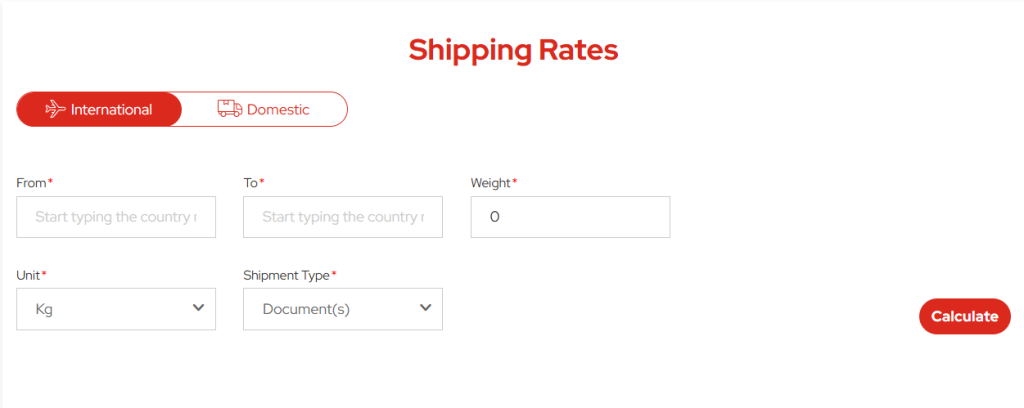
The big question: What do you charge customers?
Shipping pricing can make or break your checkout conversion rate. Unexpected costs are one of the biggest reasons shoppers abandon their baskets. So your strategy needs to feel fair — and intentional.
Here are your main options:
Real-time rates
Customers pay exactly what the carrier charges. Transparent? Yes. Conversion-friendly? Not always. Seeing a $7.82 shipping fee can feel painful, even if it’s accurate.
Flat-rate shipping
Charge a standard amount (for example, $4.99). It’s simple, predictable and clean. But you’ll need to know your average e-commerce shipping costs to avoid undercharging and hurting your margin.
Free shipping
The magic words. Nothing boosts conversions like “Free Delivery”. Of course, it’s rarely truly free. Brands usually:
- Build shipping into product pricing
- Set minimum order thresholds (e.g. Free shipping over $50)
Done right, this approach can reduce cart abandonment and increase average order value — while keeping fulfillment costs manageable.
Related Reading: Smart ways to reduce shipping costs in e-commerce
When packing boxes isn’t your job anymore
There comes a moment in every growing e-commerce brand where your living room looks like a warehouse.
Orders are stacking up. Stock is everywhere. You’re printing labels at midnight. That’s when it might be time to explore 3PL logistics solutions.
A 3PL (Third-Party Logistics provider) handles:
- Inventory storage
- Picking and packing
- Shipping to customers
- Returns processing
In other words, they take care of your entire e-commerce fulfillment operation.
Why does this matter? Because your time is valuable. Instead of taping boxes, you could be:
- Launching new products
- Running ads
- Building partnerships
- Scaling internationally
Yes, there’s a cost involved. But when managed properly, 3PL logistics solutions often lower operational stress while keeping fulfilment efficient and scalable.
And that’s what growth needs.
Related Reading: How the right 3PL fuels growth for small brands
Your simple game plan for smarter fulfillment
If you want shipping to support your growth — not slow it down — start here:
Step 1: Get the basics right
Invest in:
- A reliable shipping scale
- Right-sized packaging
- Quality mailers and boxes
Small upgrades = lower long-term fulfillment costs.
Step 2: Use shipping software
Unlock discounted carrier rates. Compare options. Print labels instantly. Lower e-commerce shipping costs without changing your product.
Step 3: Choose your pricing strategy
Decide early:
- Flat rate?
- Real-time rates?
- Free shipping threshold?
Make it intentional, not accidental.
Step 4: Know when to scale
If packing orders is stopping you from growing, it may be time to explore 3PL logistics solutions that free you up to focus on strategy.
Related Reading: 3PL vs in-house fulfillment: What’s right for you?
Key takeaway
Shipping isn’t just a back-end task — it’s a growth lever.
Master your e-commerce fulfillment, stay on top of your e-commerce shipping costs, and keep a close eye on your fulfillment costs as you scale. The brands that win aren’t just the ones that sell well — they’re the ones that ship smart.
Because making the sale is exciting. But delivering it efficiently? That’s how you build a business that lasts. Here’s how we can help with the latter.